vulns.co
/
GKData.io MCP and API Buy me a coffee

Security theme

Cloud permissions and isolation

Service identities, IAM boundaries, tenant isolation, and delegated authority. 15 disclosures · 10 related references · 4 diagrams.

Disclosures

Related learning

Amazon Web Services Implementation Guide

AWS IAM security best practices for workload identities

AWS recommends short-lived role credentials for workloads, permissions limited to the actions and resources they need, and removal of unnecessary access. Its guide also covers policy validation, access reviews and…

Reviewed 2026-10-02

Chromium Project Architecture Guide

Chromium Rule of Two: input trust, memory safety and privilege

Chromium's Rule of Two says to avoid combining untrusted input, memory-unsafe code and high privilege in one component. The architecture policy covers safer parsing, separating privileges and reviewing unsafe code even…

Reviewed 2026-10-02

National Institute of Standards and Technology Architecture Guide

NIST SP 800-190: Application Container Security Guide

NIST's container security guide explains the risks of sharing an operating-system kernel and the need to separate workloads and limit runtime permissions. It covers images, registries, orchestration, runtimes and hosts,…

Reviewed 2026-10-02

OWASP Cheat Sheet Series Implementation Guide

Authorization Cheat Sheet

OWASP recommends granting only needed permissions, denying access by default and making consistent authorization decisions on every request. The guidance also covers failure handling, logging and regression tests for…

Reviewed 2026-10-02

OWASP Cheat Sheet Series Implementation Guide

OWASP Server-Side Request Forgery Prevention

OWASP explains how destination checks and network isolation constrain requests made by a server. The guidance distinguishes services that contact a fixed set of trusted destinations from those that need broader external…

Reviewed 2026-10-07

OWASP Cheat Sheet Series Implementation Guide

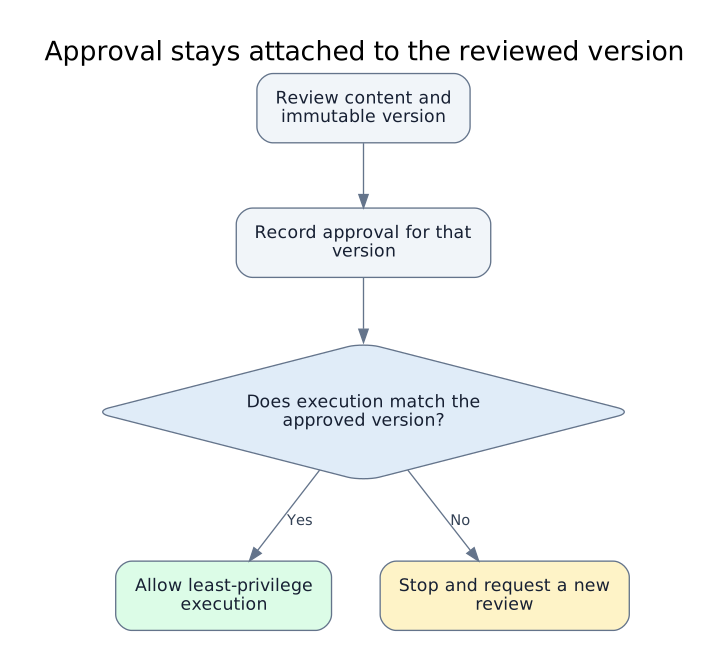
OWASP Transaction Authorization

OWASP explains how to tie approval to a specific operation and its important details. Applications must preserve the approved data, enforce valid workflow steps and check authorization again when the operation runs.

Reviewed 2026-10-02

Vercel Architecture Guide

React2Shell response: parser consistency and layered remediation

Vercel's React2Shell retrospective explains why request filters and applications must interpret data consistently. It describes normalization, separate runtime restrictions, regression tests and customer patching as…

Reviewed 2026-10-03

Visual models

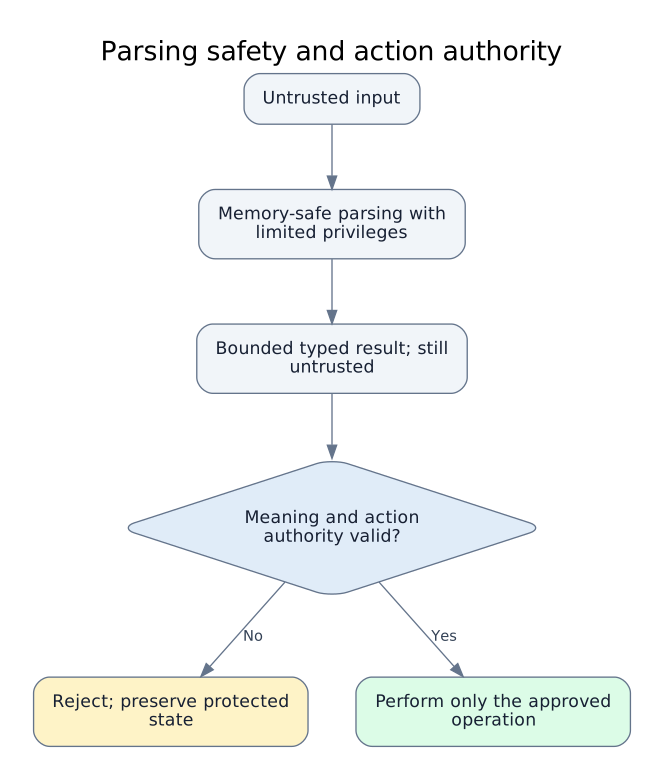
Untrusted input is parsed with memory safety and limited privileges. A bounded typed result still requires an independent meaning and authorization check before any scoped operation; failed checks reject the request.

Conceptual model Diagram

Parsing safety and action authority

Editorial conceptual model derived from the linked cases and official guidance; not a vendor architecture diagram or an exploitation sequence.

Reviewed 2026-10-02
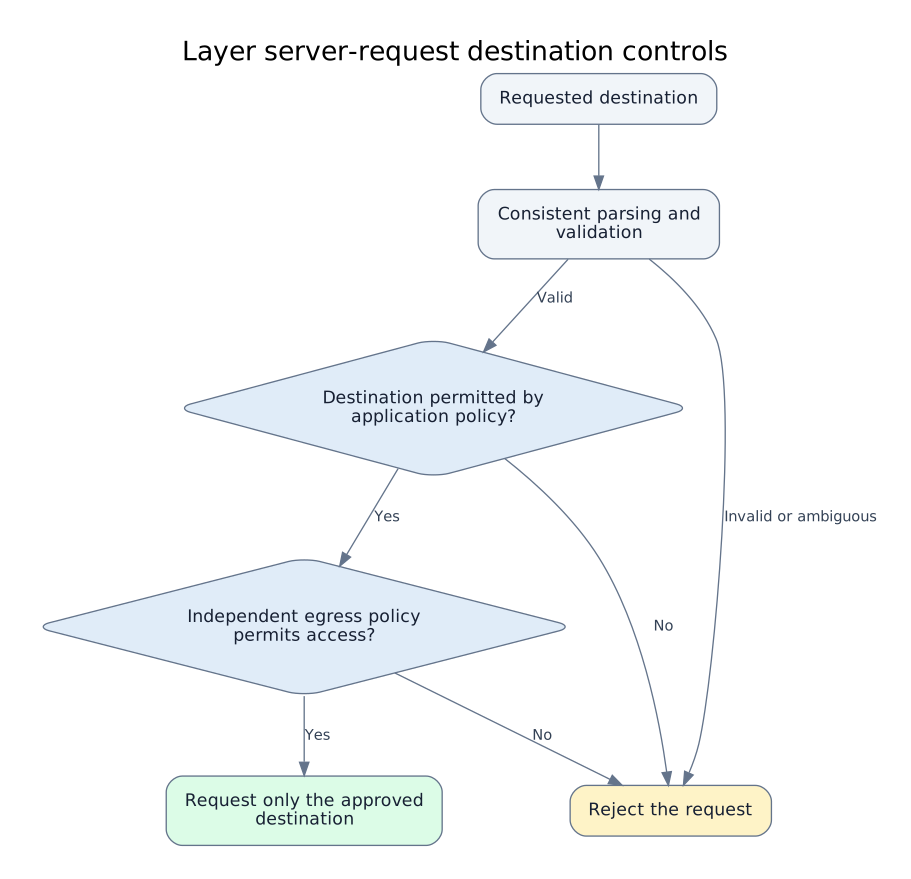
A requested destination passes consistent parsing, application policy and independent network egress checks. Invalid input or either policy failure is rejected. Only an approved destination is requested.

Conceptual model Diagram

Layer server-request destination controls

Original conceptual defense-in-depth model linked to the historical Shopify Exchange case and OWASP guidance. It is not a vendor architecture diagram. Policy must fit the service’s destination requirements.

Reviewed 2026-10-02
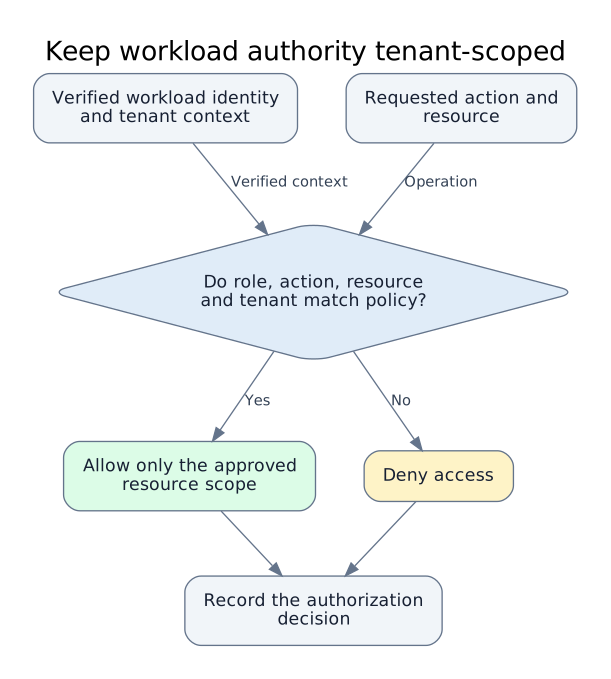
A verified workload identity and a requested operation enter an independent authorization decision. Policy checks the role, action, resource and tenant together. Only the approved resource scope is allowed; other requests are denied. Both decisions produce an audit record.

Conceptual model Diagram

Keep workload authority tenant-scoped

Editorial conceptual model derived from the linked cases and official guidance; not a vendor architecture diagram or an exploitation sequence.

Reviewed 2026-10-02

Related learning follows the topic crosswalk or an explicit diagram relationship. It does not classify a resource as a finding. Topics overlap, so their counts should not be added together.

Library synced 2026-11-18 · cases last reviewed 2026-10-05

af2809c308fc · JSON exports & schemas · CC BY 4.0 content / MIT software