Mobile links and API hosts
Review mobile link association, client configuration, and backend APIs as complementary controls with server-owned authorization.
This is the complete downloadable file. Open plain text ↗
---
name: mobile
description: "Review mobile link association, client configuration, and backend APIs as complementary controls with server-owned authorization."
---

# Mobile links and API hosts

Review mobile link association, client configuration, and backend APIs as complementary controls with server-owned authorization.

Defensive study and review of artifacts supplied by their owner. Record missing evidence as an open question.

## Bring to the review

- App link or universal-link association files
- Mobile client configuration
- API authorization design

## Review guide

### 1. Inventory claimed destinations

Document verified domains, path rules, package identifiers, and the user-visible destination for each link class.

### 2. Review handoff state

Ensure links do not carry authority that the backend cannot independently validate and expire.

### 3. Trace backend ownership

For every mobile API object, verify the server authorizes the current user and tenant, independent of the app UI.

### 4. Minimize local secrets

Review storage, logs, and diagnostics so tokens and account data are not exposed beyond the needed boundary.

## What to produce

- Link association inventory
- Client-to-server authority map
- Local data handling notes

## Common mistakes

- Trusting a client-side route as authorization
- Leaving deep-link state reusable
- Treating a configured hostname as ownership proof

## Reading and source context

### Resources

- [Authorization Cheat Sheet](https://vulns.co/research/resources/owasp-authorization-cheat-sheet/)
- [RFC 10017: OAuth 2.0 for Browser-Based Applications](https://vulns.co/research/resources/rfc-10017-browser-oauth-token-custody/)
- [OWASP Logging: trustworthy and minimal application evidence](https://vulns.co/research/resources/owasp-security-logging-evidence-quality/)

### Diagrams

- [Delegated authority stays within the approved grant](https://vulns.co/research/diagrams/delegated-grant-authority-continuity/)

### Reports

- [Google device grants lost client and permission binding](https://vulns.co/research/reports/google-device-authorization-client-scope-binding-2026/)

## Provenance

Editorial guide by vulns.co / GK Data. Updated 2026-10-11.
Library snapshot: 2026-10-04; commit d5550c7891119cf1379e235721541c947850a3b3.
The guide is an editorial synthesis. Linked records preserve their own sources and review dates.

Reader: https://vulns.co/skills/mobile/
The review
What to look for
Defensive study and review of artifacts supplied by their owner. Record missing evidence as an open question.
Inventory claimed destinations
Document verified domains, path rules, package identifiers, and the user-visible destination for each link class.
Review handoff state
Ensure links do not carry authority that the backend cannot independently validate and expire.
Trace backend ownership
For every mobile API object, verify the server authorizes the current user and tenant, independent of the app UI.
Minimize local secrets
Review storage, logs, and diagnostics so tokens and account data are not exposed beyond the needed boundary.
What to produce
- Link association inventory
- Client-to-server authority map
- Local data handling notes
Common mistakes
- Trusting a client-side route as authorization
- Leaving deep-link state reusable
- Treating a configured hostname as ownership proof
Continue the study
Reading & source context
Editorial notes above connect these references. Open each record for its original source and review date.
Visual models
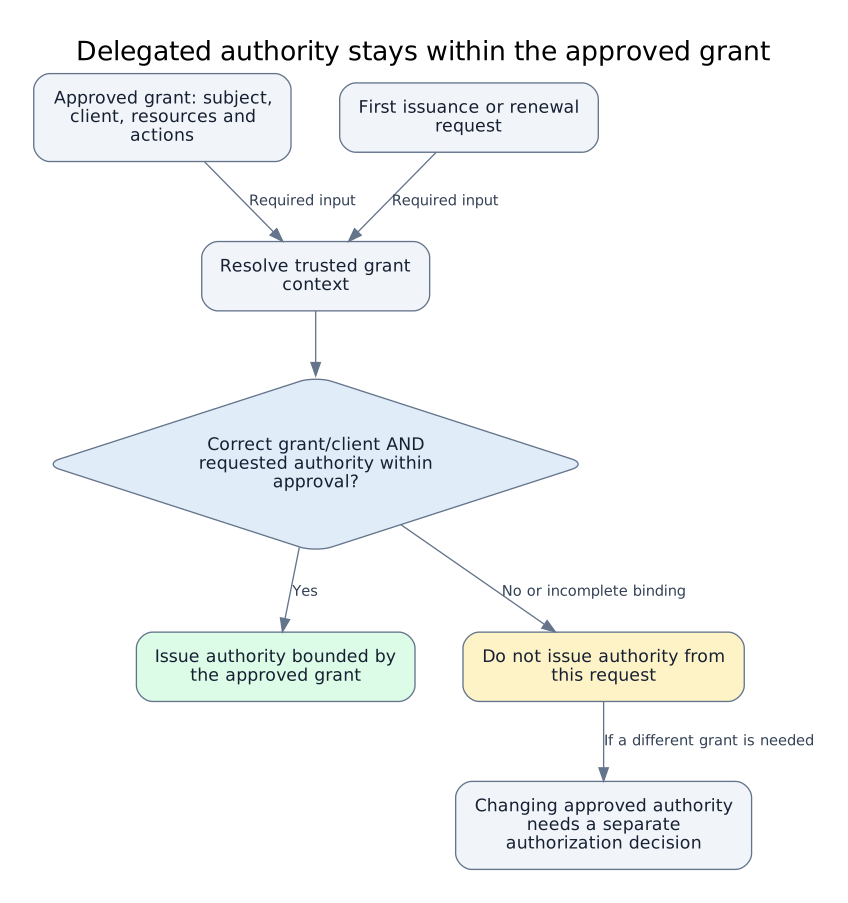
Connected disclosures
From the field toolkit
Guide by GK Data · Research snapshot 2026-10-04.
Sources and review dates are preserved in the library provenance.