vulns.co
/
GKData.io MCP

DEVulnerability family

Information exposure and response privacy.

Unintended disclosure through error responses, diagnostics and output contracts. 5 disclosures · 4 related references · 2 diagrams.

Connected collection

Disclosures

HackerOne AZAuthorization and tenant boundaries

HackerOne exports omitted internal-attachment authorization

HackerOne awarded $12,500 for internal attachments exposed through report export in 2016. Its enduring lesson for 2026 applications is that export and interactive views must enforce the same visibility policy.

USD 12,500reported awardRead

Connected collection

Related learning

OWASP Cheat Sheet Series Implementation Guide

Error Handling Cheat Sheet

OWASP guidance on centralized handling of unexpected failures, generic client-facing responses and server-side diagnostic records that do not reveal implementation details to clients.

Reviewed 2026-10-02Read

OWASP Gen AI Security Project Implementation Guide

OWASP LLM05:2025: generated-output consumer trust

Explains why model-generated content remains untrusted when passed to browsers, databases or backend functions. The relevant boundary is the consuming component: plausible model text must not acquire executable meaning…

Reviewed 2026-10-03Read

OWASP Cheat Sheet Series Implementation Guide

OWASP Logging: trustworthy and minimal application evidence

Explains how application events support investigation through consistent context, interaction identifiers, outcomes and confidence information. Distinguishes event occurrence from recording time and treats…

Reviewed 2026-10-03Read

Connected collection

Visual models

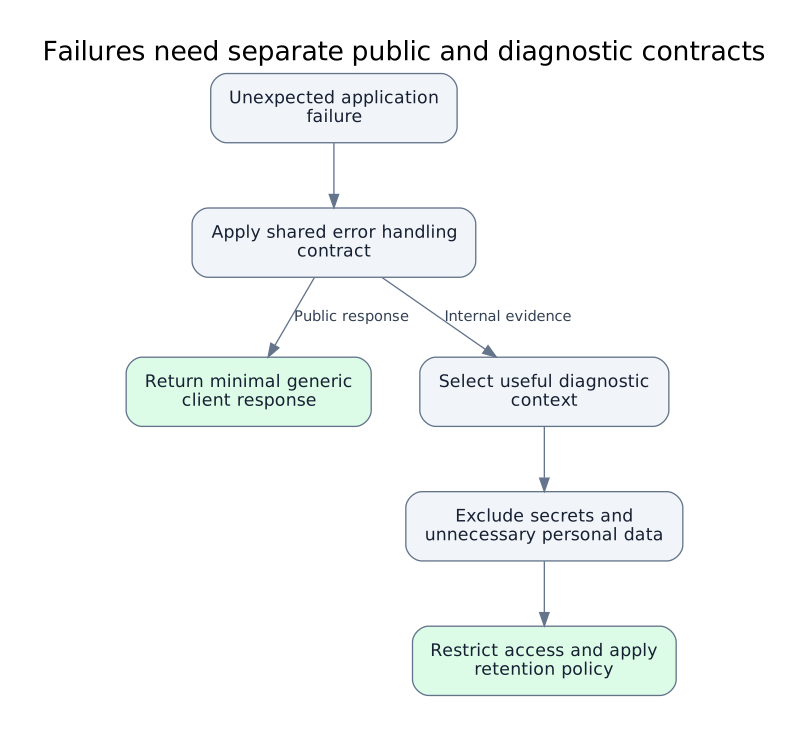
A failure reaches a shared error handler. The public response contains minimal generic information. A separate diagnostic path selects useful context, removes secrets and unnecessary personal data, and stores it under access and retention controls. Raw exception details do not flow directly to the client.

Conceptual model Diagram

Failures need separate public and diagnostic contracts

Editorial conceptual model derived from the Facebook error-response case and OWASP error-handling and logging guidance. The case establishes unintended response disclosure and broader framework remediation; diagnostic…

Reviewed 2026-10-03Read
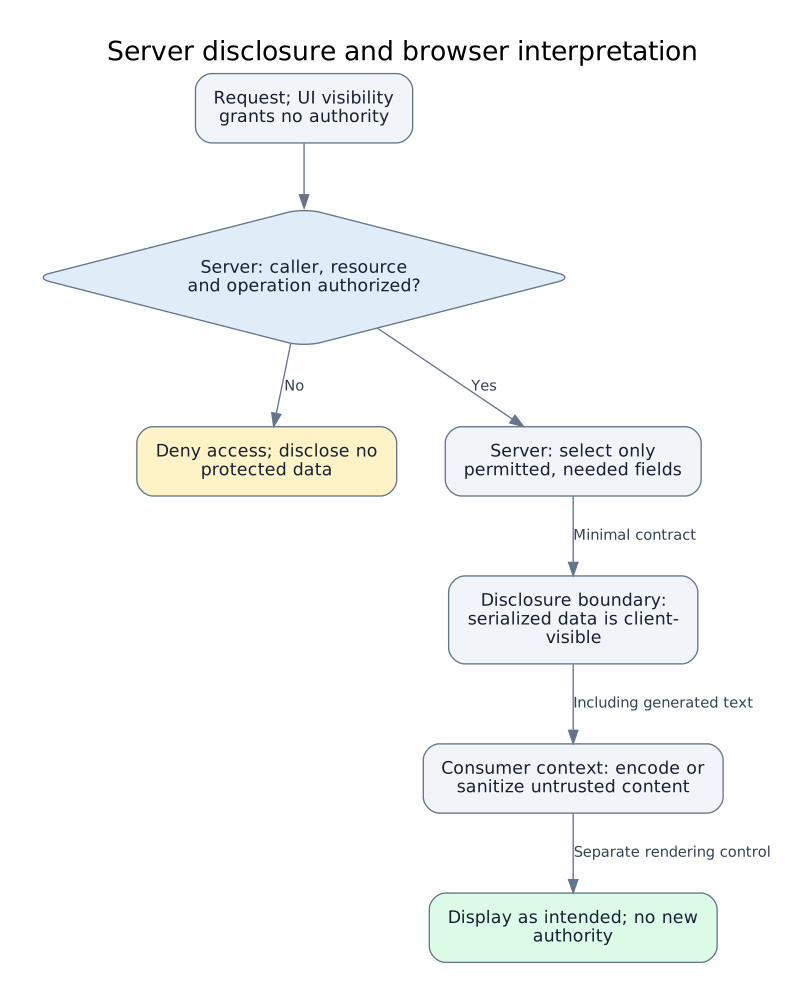
A request enters a server-side caller, resource and operation authorization decision. Denial returns no protected data. Approval proceeds to explicit field selection before serialization. Only permitted, necessary fields cross into client-visible data. A separate consumer-context handling step keeps content, including generated text, from acquiring executable meaning before display. Browser rendering never supplies server authorization.

Conceptual model Diagram

Server disclosure and browser interpretation

Editorial conceptual model: assumes an application with server-side privileged data and a browser consumer. Next.js guidance supports server authorization and minimal client-visible contracts; OWASP LLM05 supports…

Reviewed 2026-10-03Read

Related learning follows the topic crosswalk or an explicit diagram relationship. It does not classify a resource as a finding. Topics overlap, so their counts should not be added together.

GitHub snapshot 2026-10-04

d5550c789111 · JSON exports & schemas · CC BY 4.0 content / MIT software