OAuth, DPoP, and mix-up
Review delegated identity and token flows for strict issuer, client, redirect, audience, and grant binding.
This is the complete downloadable file. Open plain text ↗
---
name: oauth
description: "Review delegated identity and token flows for strict issuer, client, redirect, audience, and grant binding."
---

# OAuth, DPoP, and mix-up

Review delegated identity and token flows for strict issuer, client, redirect, audience, and grant binding.

Defensive study and review of artifacts supplied by their owner. Record missing evidence as an open question.

## Bring to the review

- Authorization-server metadata
- Registered client configuration
- Documented callback and token handling

## Review guide

### 1. Map each binding

Document issuer, client, redirect destination, state, nonce, code verifier, audience, and subject binding for the intended flow.

### 2. Review callback decisions

Confirm successful and error responses apply the same registered redirect and state validation.

### 3. Review token acceptance

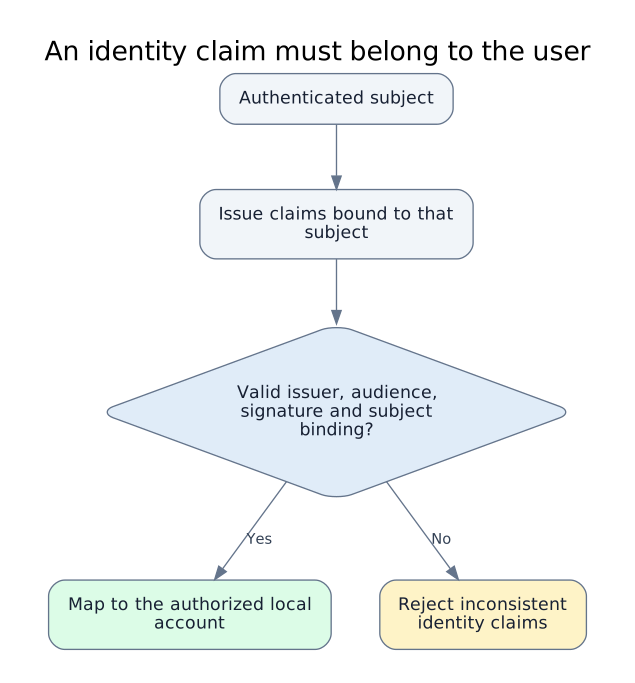
Ensure the relying service validates issuer, audience, signature, expiry, and the grant context before account mapping.

### 4. Check renewal boundaries

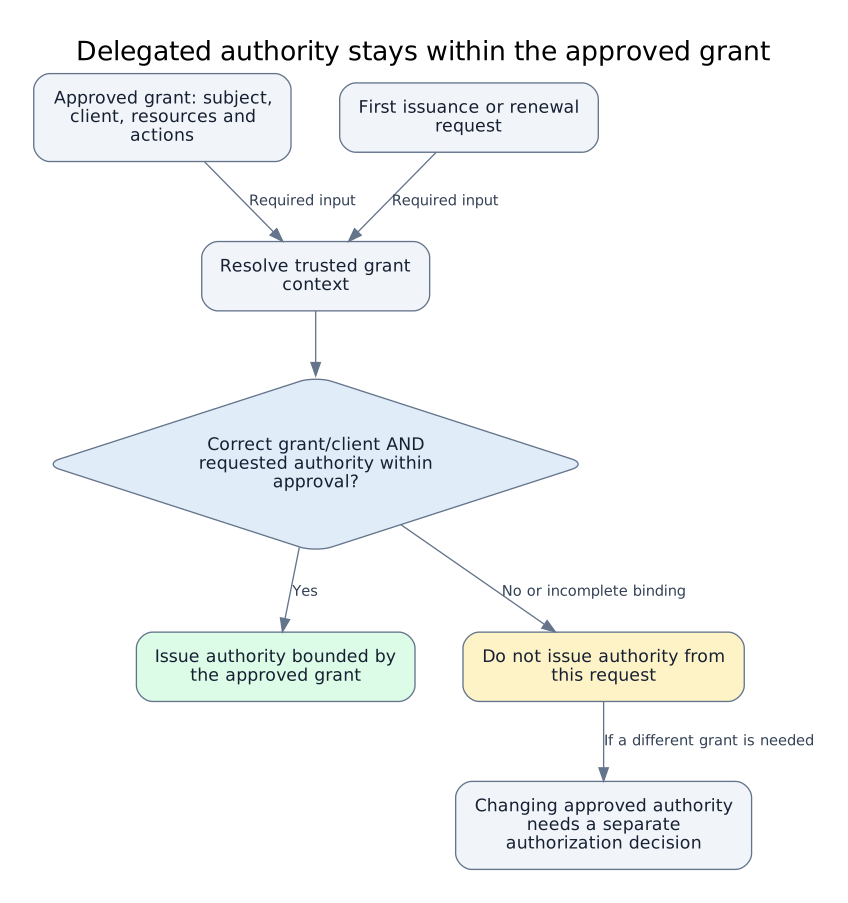
Confirm refreshed authority stays within the original approved resource and consent scope.

## What to produce

- Grant binding map
- Callback validation checklist
- Token validation contract

## Common mistakes

- Accepting a claim without provenance
- Validating only success redirects
- Letting refresh expand resource authority

## Reading and source context

### Resources

- [RFC 9700: Best Current Practice for OAuth 2.0 Security](https://vulns.co/research/resources/rfc-9700-oauth-security-best-current-practice/)
- [RFC 10017: OAuth 2.0 for Browser-Based Applications](https://vulns.co/research/resources/rfc-10017-browser-oauth-token-custody/)
- [n8n: refreshed authority must remain bound to the consented resource](https://vulns.co/research/resources/n8n-2026-refresh-grant-resource-binding/)

### Diagrams

- [An identity claim must belong to the user](https://vulns.co/research/diagrams/identity-claim-binding/)
- [Delegated authority stays within the approved grant](https://vulns.co/research/diagrams/delegated-grant-authority-continuity/)

### Reports

- [Sign in with Apple failed to bind identity claims to the authenticated user](https://vulns.co/research/reports/apple-sign-in-identity-claim-binding-2020/)
- [GitHub OAuth consent failed across request-method semantics](https://vulns.co/research/reports/github-oauth-method-semantics-2019/)
- [Google device grants lost client and permission binding](https://vulns.co/research/reports/google-device-authorization-client-scope-binding-2026/)

## Provenance

Editorial guide by vulns.co / GK Data. Updated 2026-10-11.
Library snapshot: 2026-10-04; commit d5550c7891119cf1379e235721541c947850a3b3.
The guide is an editorial synthesis. Linked records preserve their own sources and review dates.

Reader: https://vulns.co/skills/oauth/
The review
What to look for
Defensive study and review of artifacts supplied by their owner. Record missing evidence as an open question.
Map each binding
Document issuer, client, redirect destination, state, nonce, code verifier, audience, and subject binding for the intended flow.
Review callback decisions
Confirm successful and error responses apply the same registered redirect and state validation.
Review token acceptance
Ensure the relying service validates issuer, audience, signature, expiry, and the grant context before account mapping.
Check renewal boundaries
Confirm refreshed authority stays within the original approved resource and consent scope.
What to produce
- Grant binding map
- Callback validation checklist
- Token validation contract
Common mistakes
- Accepting a claim without provenance
- Validating only success redirects
- Letting refresh expand resource authority
Continue the study
Reading & source context
Editorial notes above connect these references. Open each record for its original source and review date.
Visual models
Connected disclosures
From the field toolkit
Guide by GK Data · Research snapshot 2026-10-04.
Sources and review dates are preserved in the library provenance.